Why Some Three Runs Plantation Farms Sell in Weeks and Others Sit for Months
Two farms in Three Runs Plantation can carry nearly the same price tag, sit on comparable acreage, and still land on opposite ends of the market. One goes under contract in about two months. Another, priced just as reasonably, is still sitting past the eight-month mark. As of August 2026, active listings in the community span roughly $1.2 million to $3.5 million, and their time on market ranges from about two months to well over 250 days. That spread is too wide to blame on price alone.
Ask most agents why a farm sits, and you will hear about staging, photography, or a stubborn seller who priced too high. In Three Runs Plantation, the real answer usually sits in a filing cabinet, not a listing sheet. This is a community built entirely on private septic and well systems, with a homeowners association that reviews every barn before it goes up. The farms that move quickly are the ones where a seller already has that paperwork in order before the first showing. The ones that stall are relearning South Carolina disclosure law and hunting for old Architectural Control Committee approvals in the middle of a due diligence period.
Nearly every property in Three Runs Plantation runs on a private well and septic system rather than municipal service, which puts a specific state law at the center of every transaction here. South Carolina's Residential Property Condition Disclosure Act requires sellers to complete a written statement covering the water supply and sewage disposal system before a purchase contract is signed. The standard is "actual knowledge," meaning a seller is not required to go investigate problems they do not know about, but is required to be truthful about what they do know. Marking a box "as-is" does not remove that obligation. Sellers who check "no representation" on the septic question are, in effect, inviting the buyer's own inspector to look harder.
That inspector is coming either way. Buyers financing through FHA or VA loans almost always require a septic inspection before closing, and most conventional buyers request one voluntarily given how much a failed system can cost to replace. Aiken County sits on the Fall Line, the geological boundary where the Piedmont's red clay gives way to the sandy soils of the Sandhills, and wells in this part of the county typically draw from the Middendorf and Black Creek aquifers. Those aquifers can carry naturally occurring radium, which is one of the more common reasons a water test comes back flagged. None of this means a Three Runs well is a liability. It means a seller who tests the water and pumps the tank before listing walks into negotiations with answers instead of surprises.
The pattern shows up in how deals fall apart. A buyer's inspection turns up a septic concern, the seller has no baseline to compare it to, and the conversation stalls while everyone waits on a second opinion. A pre-listing test does not just protect the seller legally. It removes the single most common reason a Three Runs contract goes back to square one.
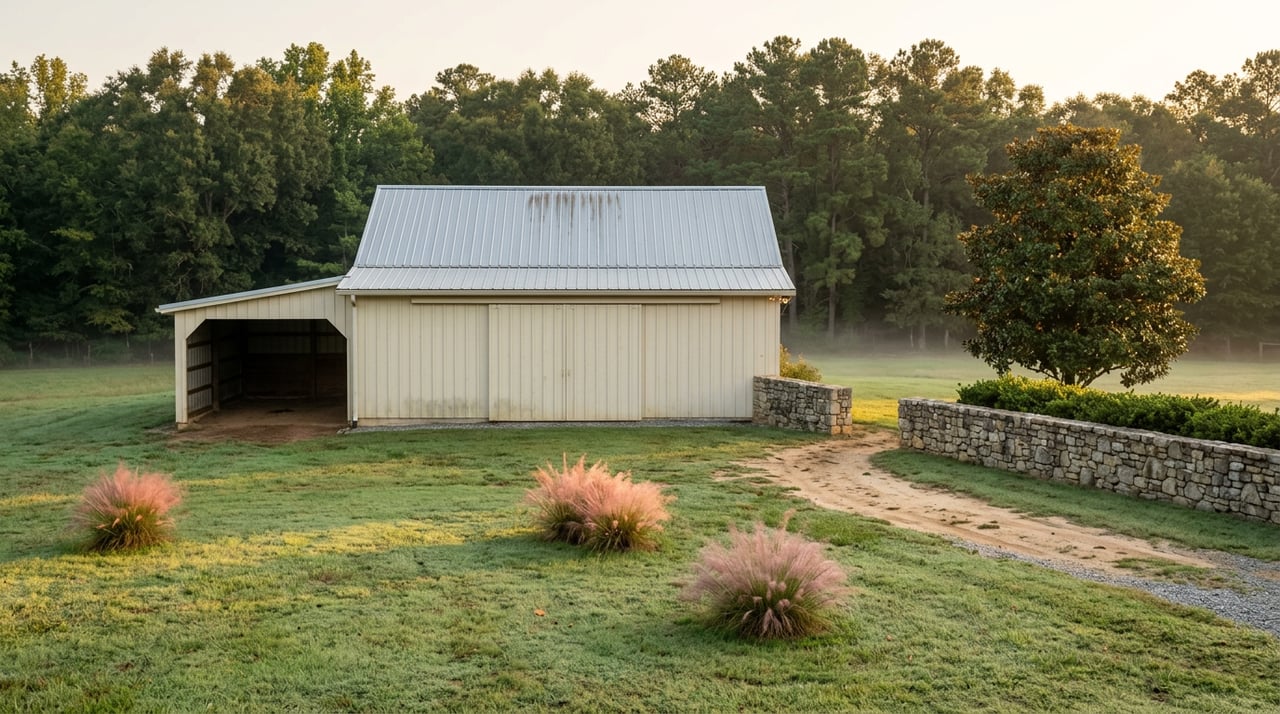
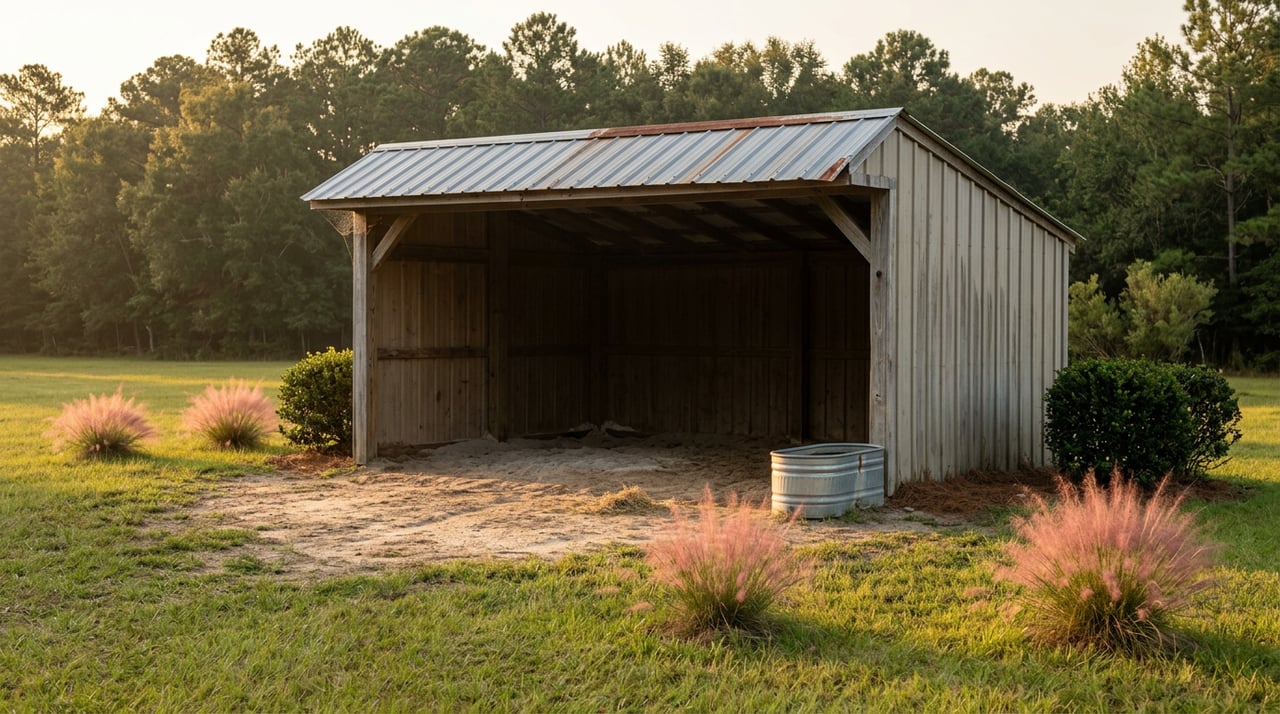
Every barn, run-in shed, and outbuilding in Three Runs Plantation went through the community's Architectural Control Committee before it was built. There is no shared community barn here. Each owner built their own, which means each structure has its own paper trail, or should. The ACC does not set a minimum size for homes or barns, and there is no time limit on construction, but every structure needs sign-off on land use, and a licensed South Carolina builder.
That approval history matters more at resale than most sellers expect. A buyer's agent working an equestrian property will ask whether the barn, the run-in shed, and any hunt-box apartment above the barn were built with ACC approval on file. A seller who bought the farm years ago and never kept a copy is left calling the HOA mid-transaction to track down records that may or may not still exist. A seller who pulls that file before listing hands the buyer's agent exactly what they were going to ask for anyway.
The community's rules layer on a few more specifics worth knowing before a farm goes on the market. Horses are permitted on smaller homesites of roughly four acres up to a limit of three, and only when the owner or a full-time caretaker actually lives on the property. That residency requirement is not a detail most out-of-area buyers will think to ask about, but it shapes who a farm is realistically marketed to.
Here is where sellers commonly lose time in the process:
| What slows a sale down | What speeds it up |
|---|---|
| No copy of ACC approval for barn or outbuildings | ACC paperwork pulled and ready to hand over |
| Well and septic tested only after a buyer's inspector flags a concern | Well and septic tested 60 to 90 days before listing |
| Seller unsure whether horse limits or caretaker rules apply to the buyer's plans | Seller can explain HOA occupancy and horse-count rules upfront |
| HOA capital contribution due at closing comes as a surprise to the buyer | Capital contribution disclosed in the listing paperwork from day one |
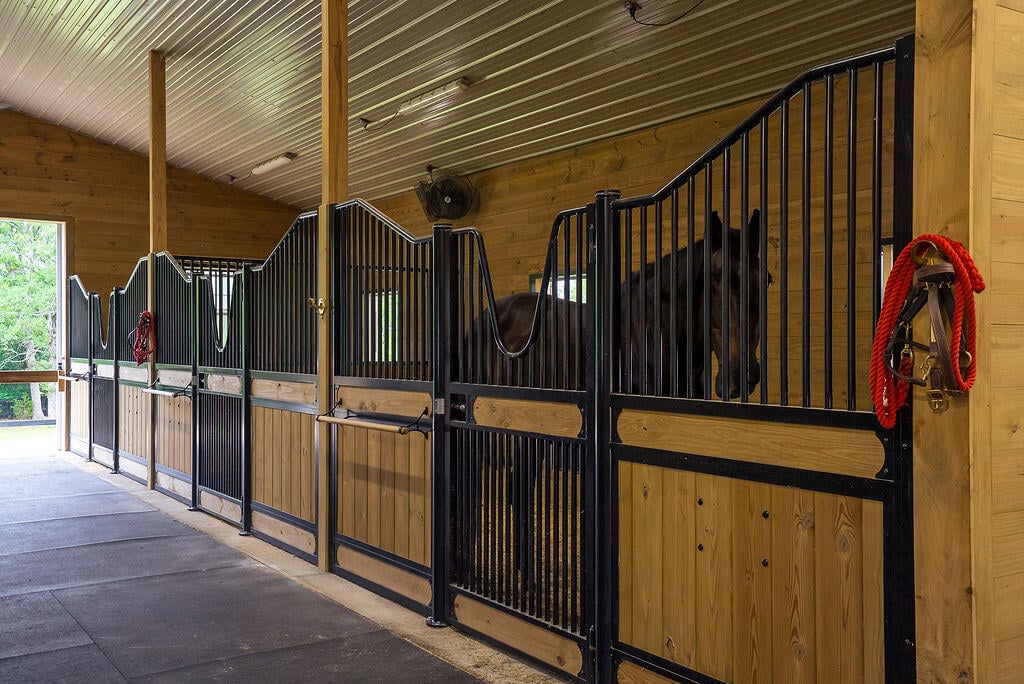
Three Runs Plantation's HOA rules go further than most communities into the daily mechanics of horsekeeping, and buyers who tour a farm here notice. The community's manure dump is reserved for members, open between 7 a.m. and 7 p.m., and residents are expected to keep manure and bedding on the concrete pad rather than letting it spread. Fence lines and the base of trees are expected to stay trimmed and free of weeds, and any fallen tree is supposed to come down and get cleared promptly.
None of that sounds like it belongs in a real estate conversation, but it is exactly what a buyer's agent walks the property looking for. A pasture with a tidy manure pad and clean fence lines reads as a farm that has been maintained to the letter of the HOA's rules, not just kept presentable for photos. A seller who has let those small maintenance items slide is often the same seller whose ACC file is missing and whose well has never been tested, because all three come from the same root cause: treating a horse farm sale like a standard residential listing until the deadline forces otherwise.
The sellers whose Three Runs Plantation farms move in the seven to twelve week range tend to start preparing 60 to 90 days before the property ever appears on the market. That window covers a septic inspection and, if needed, a pump-out and repair before a buyer's inspector arrives with less patience for surprises. It covers a water test for the well, which matters given the radium concern common to this part of the county. It covers a call to the HOA to confirm the ACC approval history for every structure on the property and to get a clear answer on the capital contribution amount due at closing, so it shows up in the listing paperwork instead of the closing statement.
None of this changes what the farm is worth. It changes how long the market takes to recognize that value. A well-documented Three Runs Plantation farm with its paperwork ready is a straightforward transaction for a buyer's agent to recommend. One with open questions on septic, ACC history, or HOA obligations is a transaction that agent has to slow down and investigate, and slowing down is exactly what shows up as extra weeks on market.
Does selling "as-is" get me out of disclosing septic or well issues? No. South Carolina's disclosure law still requires honesty about anything within the seller's actual knowledge, regardless of how the sale is structured. "As-is" affects who makes repairs, not what gets disclosed.
If my buyer is paying cash, do I still need a septic inspection? It is not legally required the way it is for FHA or VA financing, but skipping it removes the one piece of documentation that protects a seller if a dispute comes up after closing. Most experienced buyers in this market request one regardless of financing.
What is the HOA capital contribution, and who pays it? Three Runs Plantation has a one-time capital contribution tied to the sale of a property, separate from the annual HOA dues. The exact terms are set by the HOA and worth confirming directly with them before a listing goes live, so the number is accurate in the marketing materials and not a surprise at the closing table.
Selling a horse farm in Three Runs Plantation rewards the seller who treats the barn, the well, and the covenant history with the same seriousness as the house itself. That is the kind of preparation that turns a farm into a fast, clean sale instead of a listing that lingers.
If you are weighing a sale in Three Runs Plantation and want a clear-eyed read on where your farm's paperwork stands before it hits the market, Distinctive Horse Properties would love to help you get there. Let's Connect.

As the founder of Distinctive Horse Properties and Operating Principal and co-owner of Keller Williams Aiken Partners, Lea combines high-level leadership, refined marketing, local insight, and concierge-level service to help buyers and sellers navigate equestrian real estate with confidence, clarity, and care.
Lea Mccullough
Address 237 Park Avenue SW STE 101 Aiken, SC 29801