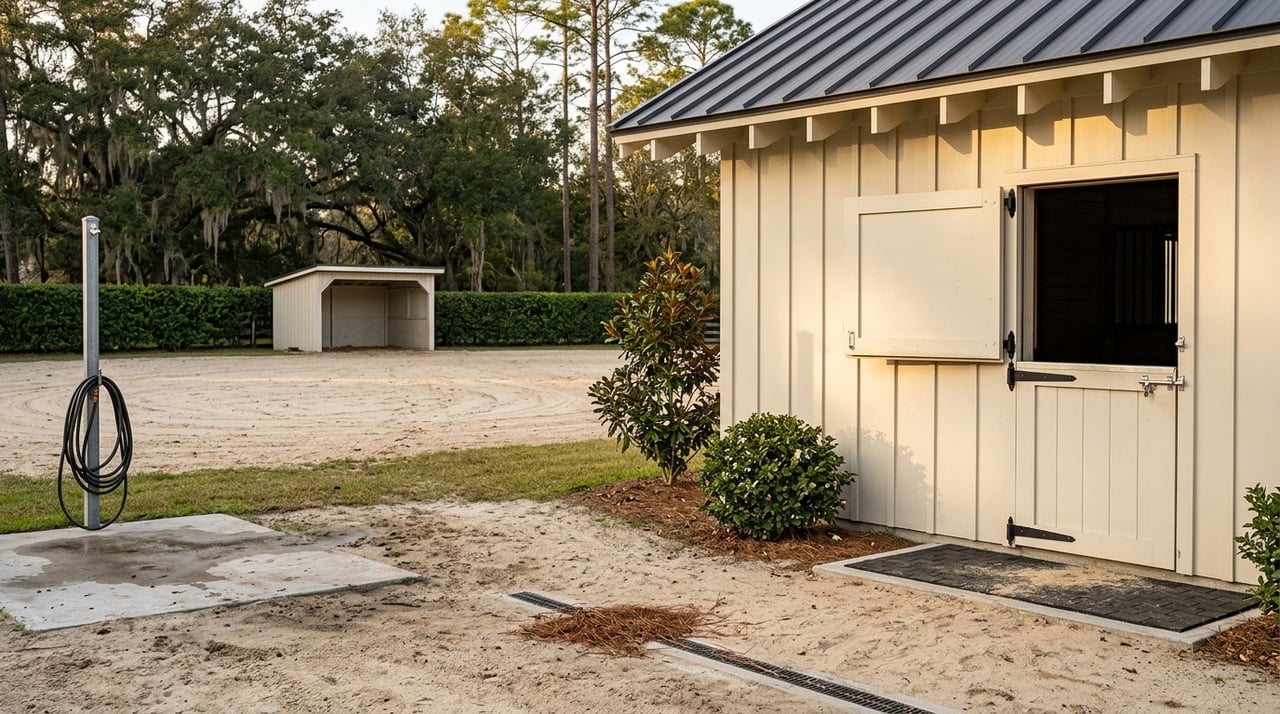
What To Look For When Buying In The Paddocks Equestrian Community
If you are thinking about buying in The Paddocks, it helps to know that not every horse property in an equestrian community functions the same way in real life. A lot can look perfect in photos, yet still fall short when you factor in trail easements, fence rules, turnout capacity, or where a barn and arena can actually go. This guide will help you focus on the details that matter most so you can judge whether a property in The Paddocks truly fits your horses, your routine, and your long-term plans. Let’s dive in.
The Paddocks is governed as a residential equestrian community under recorded covenants through the Paddocks Homeowners Association, Inc. The declaration specifically allows a single-family home along with stables, barns, riding rings, and other horse-related facilities that are typical in an equestrian neighborhood. That matters because the horse lifestyle is built into the community structure, not added as an afterthought.
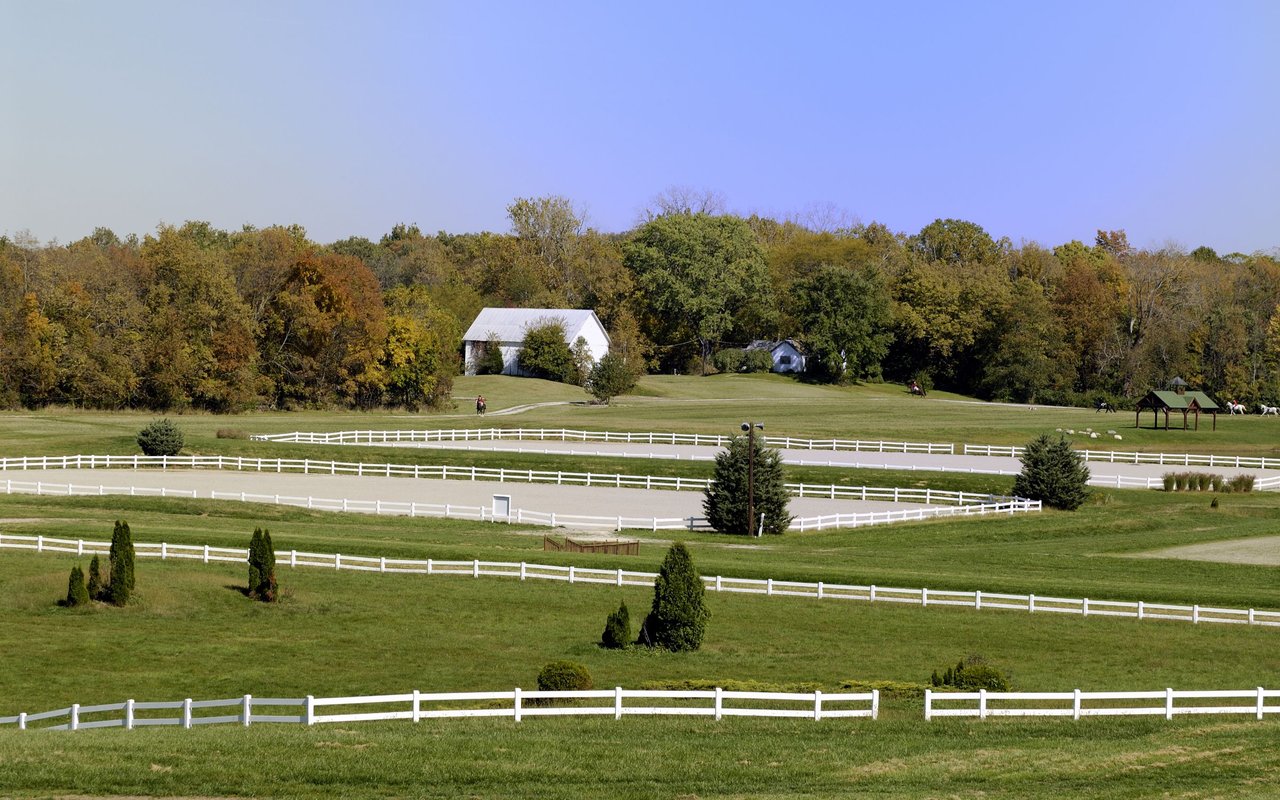
The community is also known for a lower-density feel, larger acreage parcels, and private riding trail access. For many buyers, that mix of privacy and horse use is the real draw. Still, the value of a property here depends on how well the lot works within the recorded rules.
Before you get emotionally attached to a home or parcel, ask for the full recorded declaration, any amendments, the plat, and any current architectural review guidelines. Listing descriptions can be helpful, but they do not replace the documents that actually control how the property can be used. In The Paddocks, those details shape everything from horse count to fencing style.
A 2022 amendment extended the declaration to adjacent property that had been subdivided into five lots and a common area. Because of that, you should confirm whether the property you are considering is in the original section or in the annexed portion that is governed by the same recorded rules. That small detail can affect how you review plats, easements, and shared areas.
A beautiful lot is not always a practical horse property. In The Paddocks, the best fit is usually the parcel whose acreage, layout, and easements match how you actually plan to live with horses day to day.
The covenants allow no more than one horse per acre of lot. That gives you a simple starting point, but the real question is how much of that acreage is usable for turnout, circulation, and support space.
When you walk a property, pay attention to:
A lot may meet the rule on paper but still feel tight once you map out paddocks, driveways, barns, and riding space.
Horse properties work best when movement feels easy. You want to picture how horses will move from barn to turnout, how hay and bedding will be delivered, and where trailers can turn and park without creating bottlenecks.
That is especially important if you want a property that feels manageable over time. A smart layout often matters just as much as raw acreage.
The Paddocks allows barns, stables, and garages, but structures must be compatible with residential and equestrian use. The covenants also limit each lot to one single-family residence. Commercial, trailer, manufactured, and modular structures are not allowed.
If you are planning to build, expand, or renovate, verify that your vision fits the community standards before moving forward. This is one of the most important steps for buyers who want a custom home-and-barn setup rather than simply using what already exists.
The declaration sets a minimum of 2,000 square feet for the first floor of the primary residence. It also sets a minimum of 1,200 square feet for a guest house or servants’ quarters.
Those minimums matter if you are thinking about a smaller footprint, a compact guest residence, or a phased building plan. It is better to know that early than to discover it after you own the land.
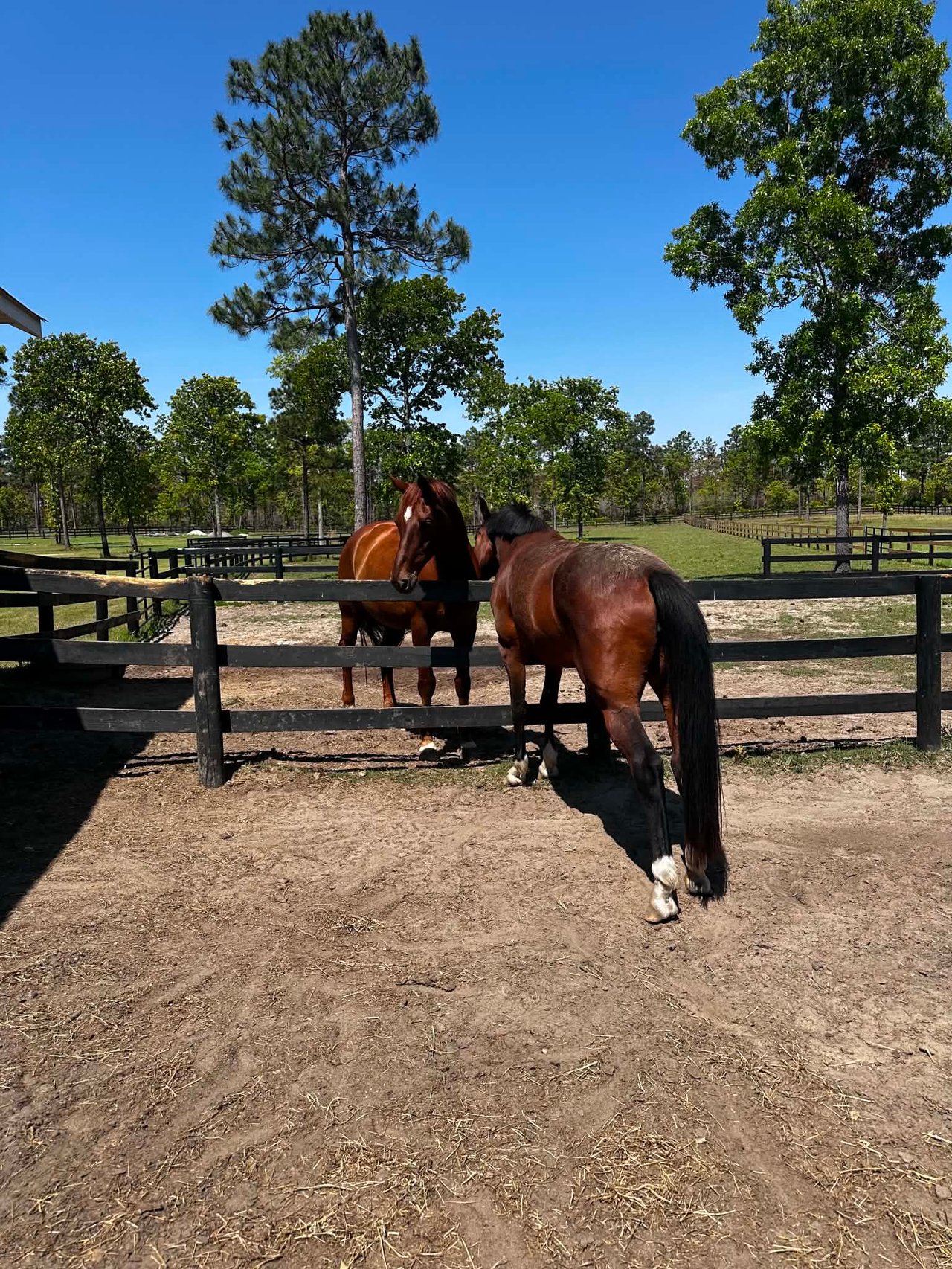
Fencing is a major part of both function and appearance in an equestrian community. In The Paddocks, visible fencing must be traditional three-board or four-board flat black equestrian fencing. Chain link, plastic, bar, hog, and woven wire fencing are prohibited.
No-climb fencing is allowed only when it is attached to the inside of the board fence. That can be a practical option for horse safety, but it also affects your installation cost and your planning.
The covenants require fences to be set back at least 10 feet from side lot lines and 20 feet from rear lot lines unless an individual plat states otherwise. This can significantly affect paddock design, pasture size, and how much open land remains for an arena or barn.
If a property appears fully fenced, it is still wise to confirm that the layout aligns with the recorded requirements. If you plan to reconfigure fencing later, those setbacks should be part of your design from the beginning.
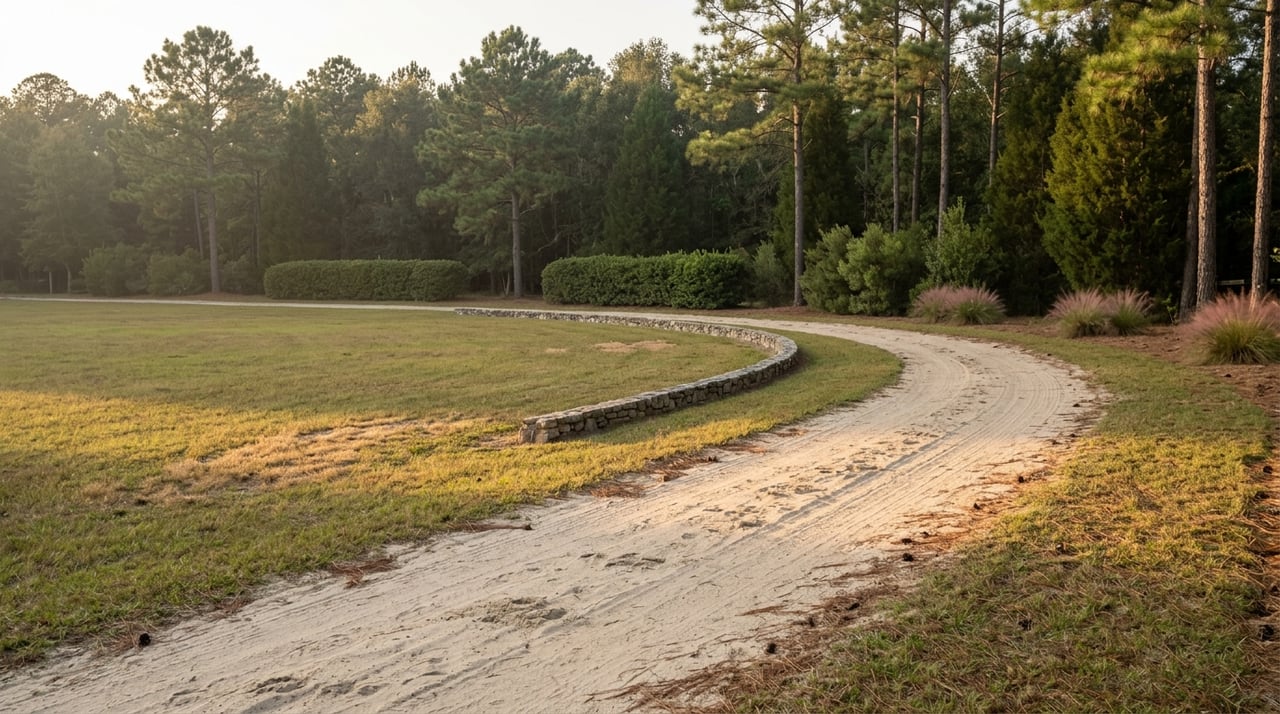
In The Paddocks, trail access is not just a lifestyle perk mentioned in marketing. It is part of the recorded plan. The declaration reserves 20-foot riding trail easements within the common area and across certain declarant property.
That means two lots that seem similar online can offer very different riding experiences in real life. One may have direct access to the trail system, while another may only be near it.
When evaluating a property, make sure you understand:
The declaration says the lot owner must keep the easement area mowed and free of obstructions or hazards. It also allows the declarant or association to set rules for trail and arena use and maintenance. That makes the plat one of your most important decision-making tools.
Current market materials describe The Paddocks as having a basic shared sand ring, and they also reference a community grass riding arena. For some buyers, that is a nice bonus that supports occasional schooling or community use.
For others, shared amenities will not replace the need for a private riding space at home. If regular training is part of your routine, think carefully about whether the lot offers a practical arena site in addition to access to community features.
The homeowners association in The Paddocks is responsible for common properties after conveyance, including maintenance, taxes, and insurance. That is standard community structure, but the HOA here also matters because the governing documents shape what you can and cannot do with the property.
The lots are limited to single-family residential use and related equestrian or recreational purposes. There is only a narrow home-business exception, and it cannot employ non-residents or increase traffic.
If you are hoping to run boarding, lessons, training, breeding, or another horse-related business from the property, do not assume it is allowed. Verify permitted use before you make an offer.
The covenants also restrict signs and appear to limit vehicle storage and parking, including boats, trailers, trucks, buses, motor homes, and other recreational vehicles. If you have horse trailers, equipment, or extra vehicles, request the current HOA rules and resale packet so you can review the details carefully.
Part of The Paddocks appeal is its position within Aiken County’s broader equestrian culture. The county highlights horseback riding, fox hunting, polo, steeplechase, dressage, flat racing, jumping, and trail riding, along with year-round equestrian events. For buyers who want more than just a place to keep horses, that larger setting can be a major part of the value.
Hitchcock Woods is one of the most important local trail amenities to understand. Aiken County identifies it as a 2,100-acre urban forest with 65 miles of trails, and the Hitchcock Woods Foundation says it is open year-round from sunup to sundown, with no bicycles or motorized vehicles allowed. That makes it a meaningful lifestyle amenity for riders, though it is still a passive recreation trail system rather than an open-use riding park.
Bruce’s Field serves a different role. The Aiken Horse Park Foundation describes it as a premier equestrian facility, but also states that it is closed to the public outside scheduled events and operates strictly as a horse show venue. So while proximity can be valuable for competition access and spectating, it should not be treated as everyday schooling space.
Aiken County also lists Stable View as a 1,000-acre recreational venue with 15 miles of trails and overnight accommodations. The county identifies The Vista as a venue with dressage arenas, derby stadium jumping arenas, and cross-country schooling. Together, these venues help explain why location in Aiken can influence your buying decision almost as much as the property itself.
When you buy in The Paddocks, the goal is not simply to find the prettiest home or the largest parcel. The best purchase is the property whose recorded easements, fence plan, turnout potential, and allowed uses line up with how you actually live with horses.
That kind of fit protects both your day-to-day enjoyment and your long-term value. In a community like The Paddocks, the details are where the real difference is made.
If you want help sorting through lots, covenants, trail access, or the practical horse-use value of a property in The Paddocks, Lea Mccullough can help you evaluate the details with an equestrian eye and local Aiken knowledge.

Aiken, SC, has rightfully earned its title as the “Best Small Town in the South.”
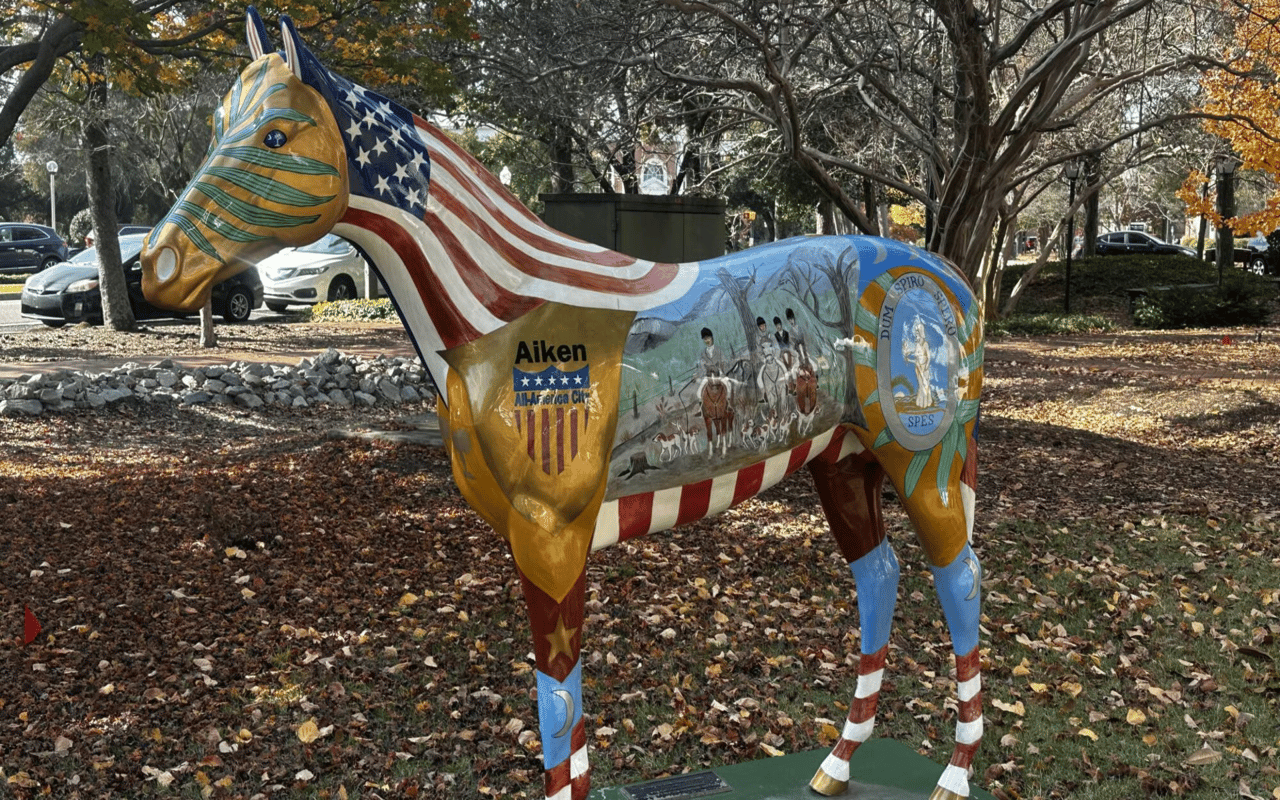
For those who enjoy outdoor activities, Aiken provides ample opportunities to explore nature.
As the founder of Distinctive Horse Properties and Operating Principal and co-owner of Keller Williams Aiken Partners, Lea combines high-level leadership, refined marketing, local insight, and concierge-level service to help buyers and sellers navigate equestrian real estate with confidence, clarity, and care.
Lea Mccullough
Address 237 Park Avenue SW STE 101 Aiken, SC 29801