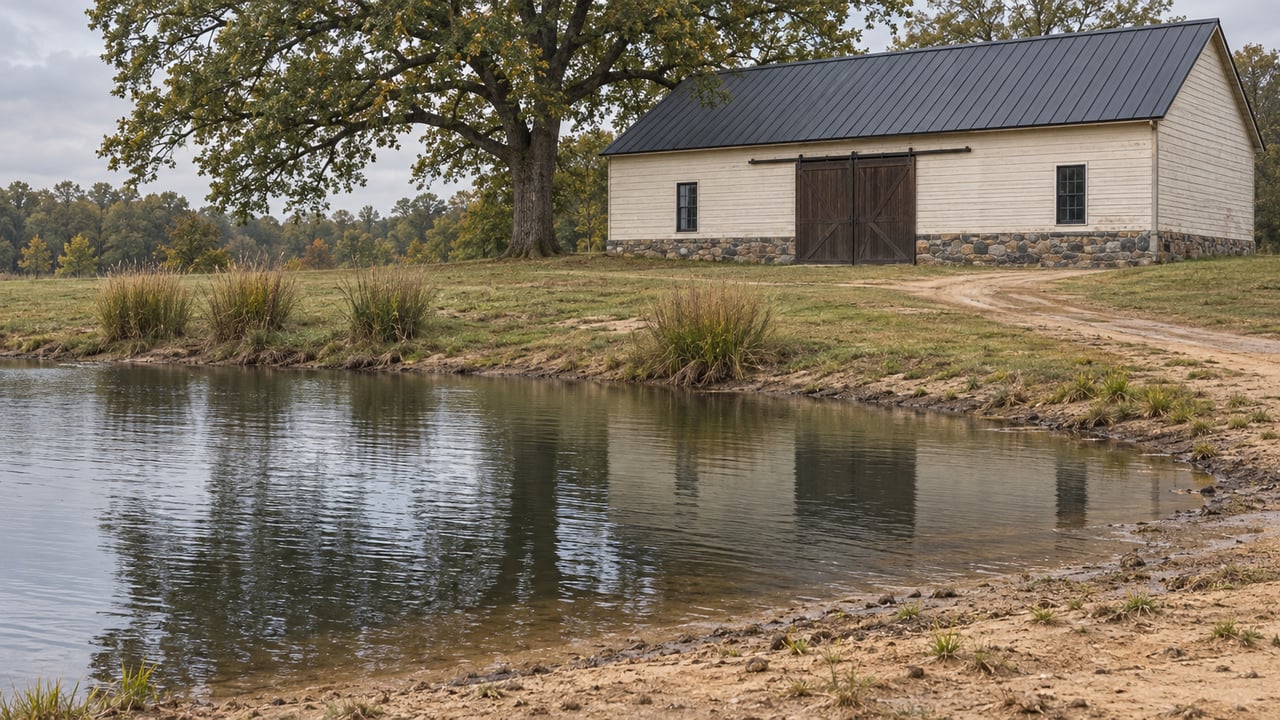
The Senator Whose Farm Became Mill Race
Laughlin Loop is not a developer's invention. It carries the actual name of a man who spent decades on this ground: former South Carolina state senator Michael Laughlin, who represented Aiken County in the State Senate from 1968 to 1976 and later served as president of Mill Race Farms, the working sporting property the current community grew out of. The eight ponds threaded through the neighborhood, the more than fifty miles of trail, and the acreage running down to the Edisto River were not amenities a subdivision plan added later. They were already there, built and maintained as a private farm long before the first residential lot sold.
That distinction matters for anyone riding the trails or fishing the ponds today. The infrastructure under Mill Race predates the idea of Mill Race as a neighborhood by roughly half a century.
Laughlin was born in Aiken in 1944, the grandson of Thomas Laughlin, an executive with the Jones & Laughlin Steel Company. He went through Aiken Prep, then the Brooks School in North Andover, Massachusetts, then the University of Virginia. In 1968, still in his twenties and enrolled in law school at the University of South Carolina, he withdrew to run for the State Senate. Recruited by the Democratic Party to challenge a sitting Republican, he won by roughly 3,000 votes and took his seat as one of the youngest state senators in South Carolina's history, according to the Aiken Standard's 2022 obituary.
He held the seat for two terms. In March 1976, standing alongside Governor James Edwards at a Columbia news conference, Laughlin announced he was switching to the Republican Party, telling a reporter the state Democratic Party had drifted further left than his own views. He lost his reelection bid that November in a year when Jimmy Carter carried South Carolina's electoral votes, the last time a Democratic presidential candidate has done so.
After leaving office, Laughlin turned to business and charity work. He served as president of Eagle Enterprises, which owned two radio stations, and as president of Mill Race Farms. He supported the Green Boundary Club, Aiken Prep, and the Hitchcock Woods Foundation, and in the early 2010s spent four years on the board of the New Holland Volunteer Fire Department, donating the land the department used for its Station Two. He died in 2022 following an accident at his home in Aiken County.
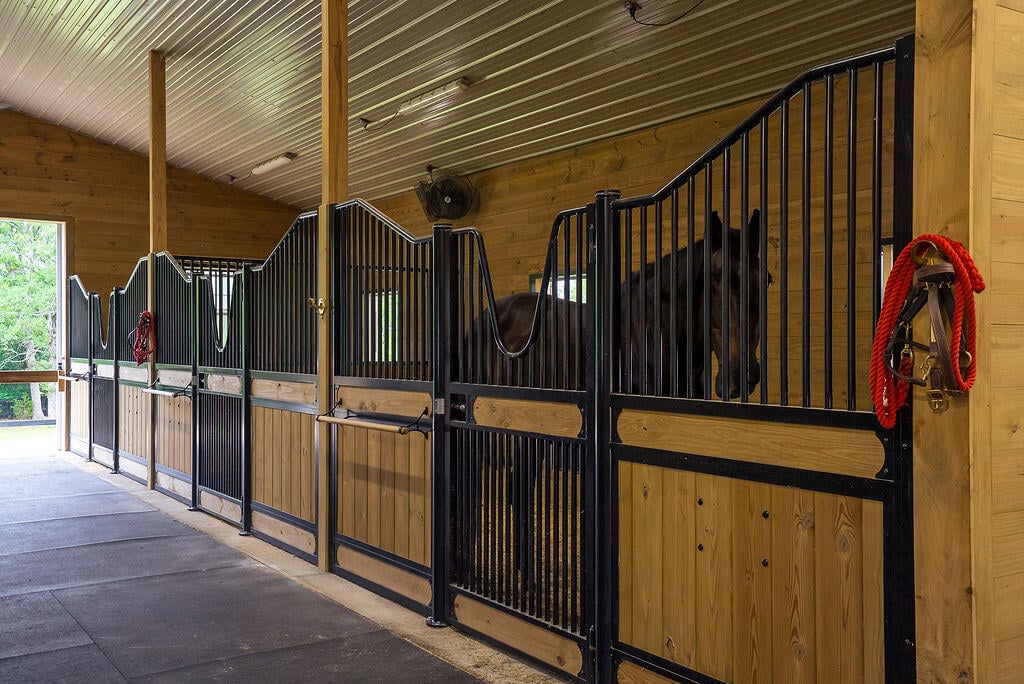
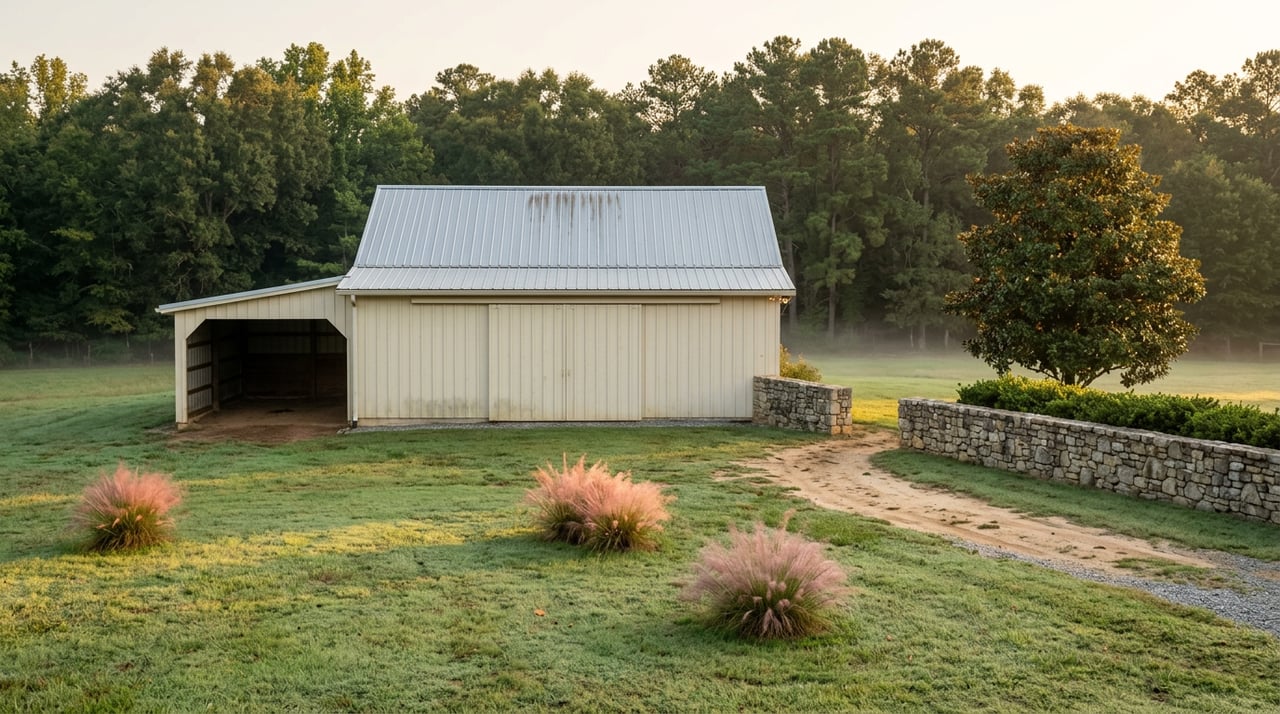
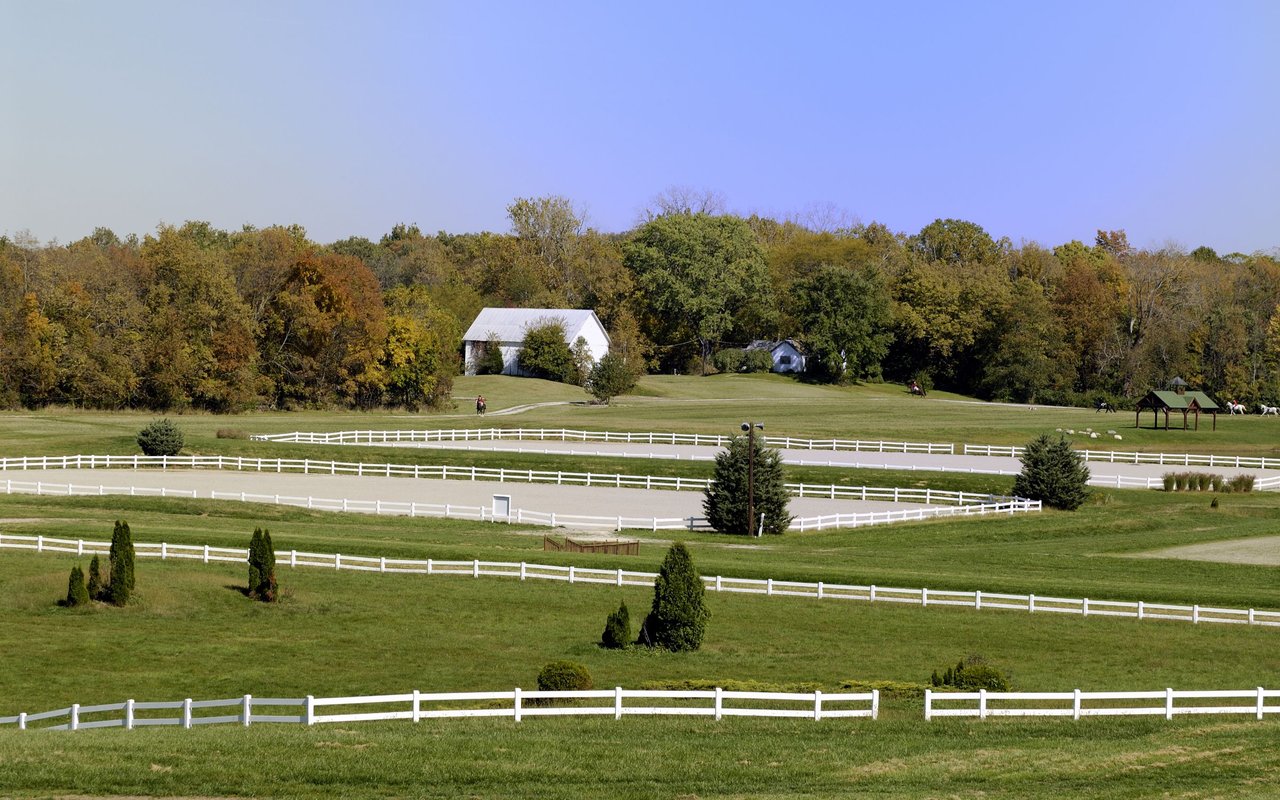
Before it carried Laughlin's name on a street sign, Mill Race Farms operated as a private sporting property known regionally as a foxhunting fixture and hunter/jumper training ground. That description isn't marketing language applied after the fact. It describes what the land was actually built for during Laughlin's ownership: a working farm organized around riding, training, and hunting rather than residential frontage.
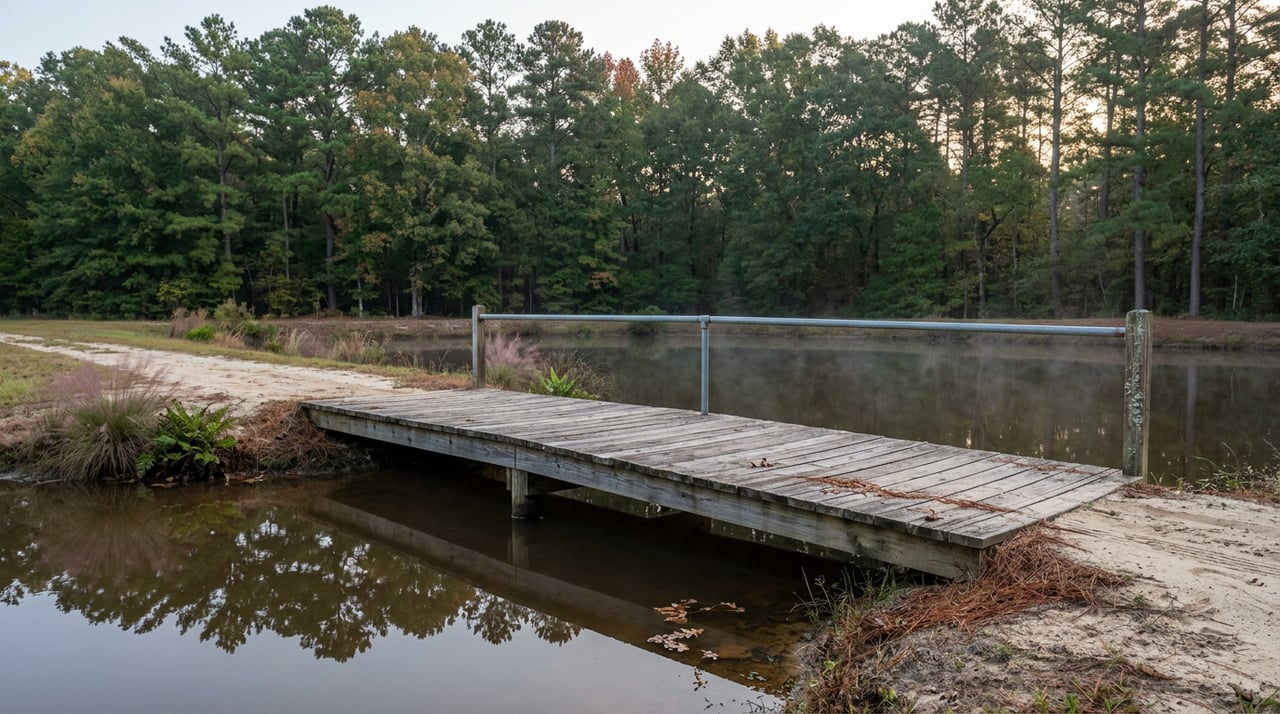
The footprint of that farm is the same footprint residents use now. Eight ponds sit throughout the property. More than fifty miles of established riding and walking trails wind through pasture and wooded ground. Over two hundred acres bordering the Edisto River sit under conservation easement, protected from development and folded into the community's trail system instead of divided into waterfront lots. Deer, wild turkey, fox, ducks, eagles, and a wide range of native bird species are common across the acreage, a byproduct of land that stayed largely undisturbed for generations rather than cleared and re-graded for construction.
None of that had to survive Laughlin's ownership intact. Farms this size in Aiken County get broken into smaller residential parcels constantly. Mill Race kept its pond count, kept its trail mileage, and kept its river frontage under easement instead of pavement. That outcome reflects a choice about how the land would be handled, not an accident of geography.
October brings this ground closest to its original use. Whiskey Road Foxhounds, the mounted hunt recognized by the Masters of Foxhounds Association of America and active across large tracts of Aiken, Allendale, Bamberg, and Lexington counties, opens cubhunting in October and holds its formal Opening Meet in November, according to Visit Aiken SC. From there, hounds go out Thursdays and Sundays through mid-March, working the sandy soil footing typical of this part of the state, with some fixtures jumping coops and telephone-pole obstacles and others running without jumps at all.
Mill Race sits inside that same hunt country, not because a developer designed it to look the part, but because the ground has suited mounted foxhunting since well before residential lots existed here. A few dates line up on the calendar for anyone out on the trail network this fall:
None of that requires a Mill Race resident to belong to a hunt. It does mean the horn, the hound cry, and the sight of a mounted field crossing open ground in autumn are not incidental to this particular stretch of Aiken County. They are closer to the oldest use this land has had.
Laughlin's connections outside Mill Race tell a similar story in smaller form. The land he donated for New Holland Volunteer Fire Department's Station Two sits inside the same rural network of roads and farms Mill Race belongs to. New Holland's former chief, Dennis Jackson, recalled him in the Aiken Standard's obituary as someone who gave land where it was needed rather than treating every parcel as an asset to be maximized.
That instinct, land kept working rather than land converted for the highest possible return, runs through everything Mill Race inherited. The ponds stayed ponds. The trail mileage stayed trail mileage. The river frontage stayed under easement rather than becoming another row of waterfront driveways. Laughlin Loop is the plainest marker of all of it: a street named for the one person whose decisions about this specific ground shaped what every resident here rides, fishes, and walks through now.
Curious how a specific parcel along Laughlin Loop, Snipes Pond Road, or Ranchero Street fits into that same footprint, ponds and easement included? Distinctive Horse Properties can walk you through what's recorded against any given lot. Let's Connect.

As the founder of Distinctive Horse Properties and Operating Principal and co-owner of Keller Williams Aiken Partners, Lea combines high-level leadership, refined marketing, local insight, and concierge-level service to help buyers and sellers navigate equestrian real estate with confidence, clarity, and care.
Lea Mccullough
Address 237 Park Avenue SW STE 101 Aiken, SC 29801