The Barn Is Beautiful—But Does the Property Work for Your Horses?
What to look for beyond the listing photos when shopping for an equestrian property.
You know the feeling. You open a listing, see a beautiful barn, and immediately picture your horses looking out over the stall doors. There’s a charming home, green pasture, and a spot that seems perfect for your morning coffee.
It’s easy to start imagining life there before you’ve even scheduled a showing.
But before you decide where the tack trunks will go, there’s another question to ask: How would this property work on an ordinary day with your horses?
Think morning feeding, muddy boots, hay deliveries, and bringing everyone in when the weather changes. A property’s beauty may draw you in, but its layout and condition deserve just as much attention.
Here’s what to look for when touring your next equestrian home.
A listing’s acreage is a starting point. The next step is understanding how much of that land suits your plans.
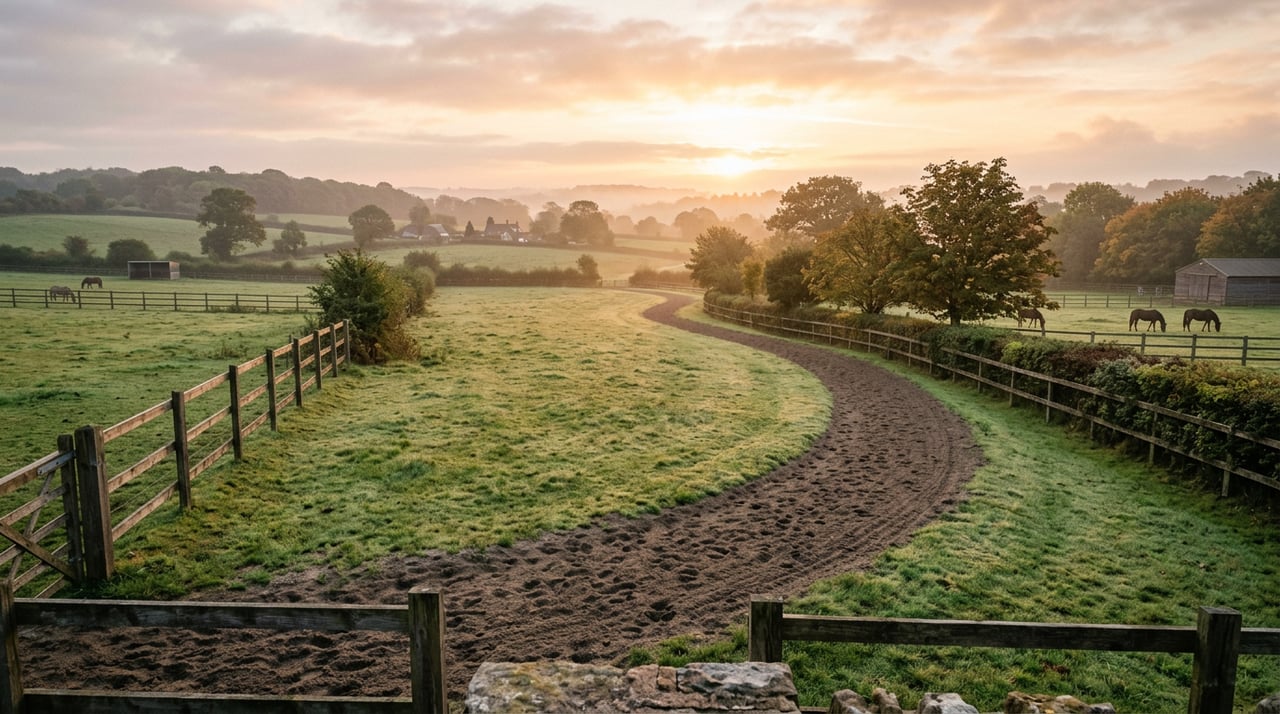
Walk the property and notice where the usable turnout areas are. Is the land relatively level, or are large portions steep, wooded, or wet? How much space remains once you account for the home, barn, driveway, and other buildings?
University of Minnesota Extension recommends considering terrain and avoiding wet areas and steep slopes when planning horse pasture. That makes the shape and condition of the land an important part of your evaluation.
Ask yourself:
A useful showing question: “Can you show me which parts of the property are currently used for the horses?”
A sunny showing can tell you a lot. It may tell you very little about where water collects.
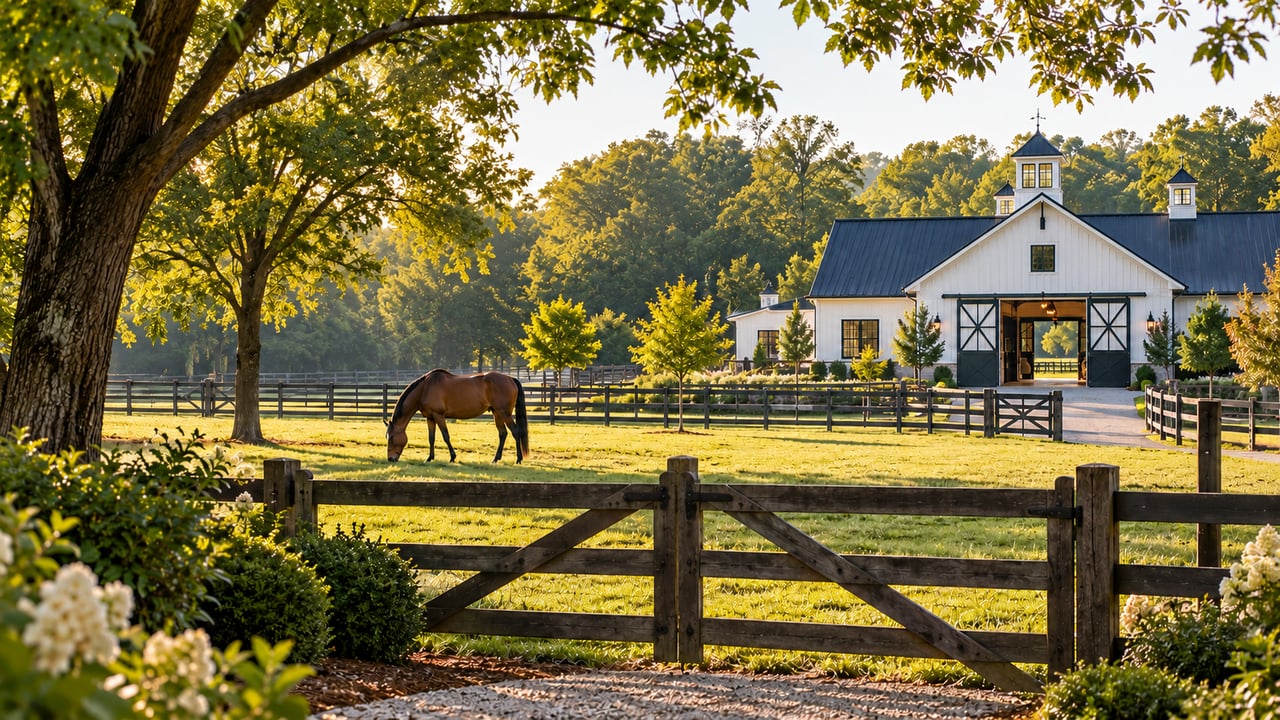
Pay attention to barn entrances, pasture gates, water troughs, and paths between buildings. These are places you’ll use repeatedly, regardless of the weather. Extension guidance identifies gates, lanes, and areas around shelters, feeders, and water sources as common locations where mud management and drainage deserve attention.
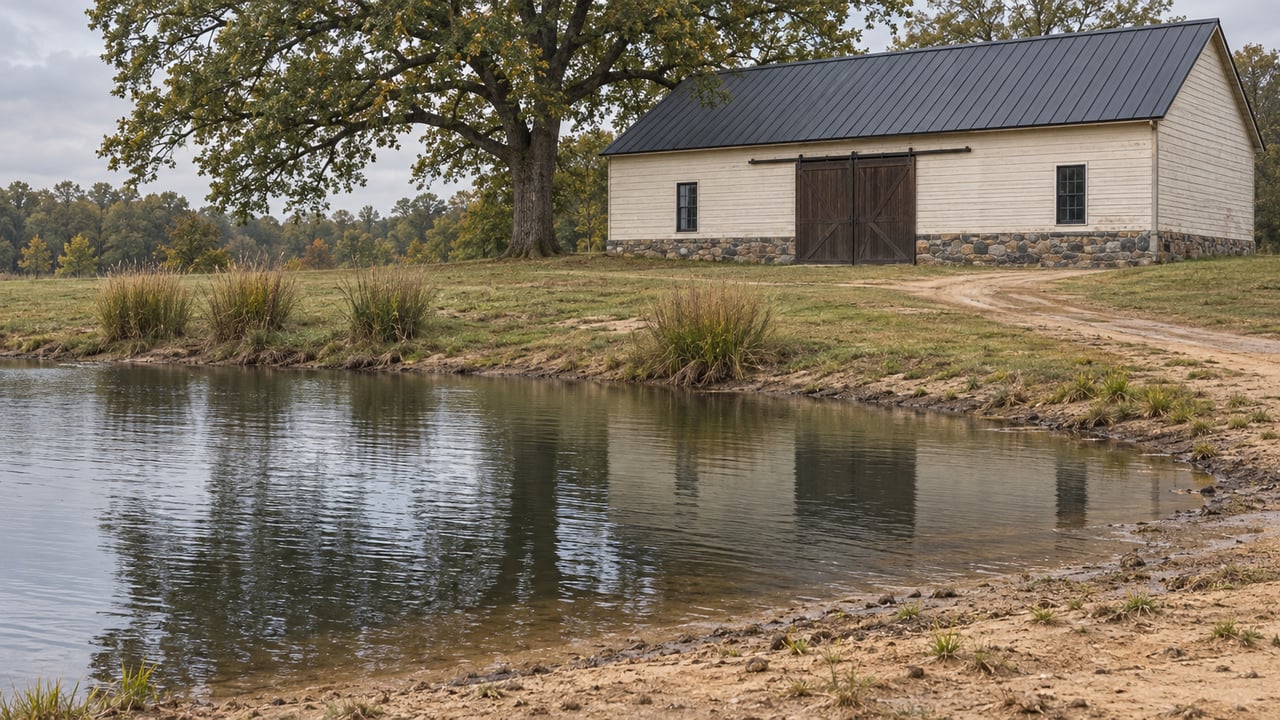
Look for standing water, worn channels, heavily churned ground, or signs that water flows toward the barn.
Ask:
If possible, arrange a second visit after rain. You may learn something the listing photos could never show.
Freshly painted fencing makes a lovely first impression. Take time to inspect its condition, too.
Look at posts, rails, wire, corners, and gate latches. Notice loose sections, damaged materials, exposed sharp edges, and areas that may need repair before your horses arrive.
Fencing should be evaluated for containment and suitability for horses, along with maintenance needs and cost. Gate placement and access also matter when planning pasture use.
Try opening the gates yourself. Imagine doing it while holding a lead rope or pushing a wheelbarrow.
Consider:
A useful showing question: “Which sections of fencing have been replaced recently, and which may need attention next?”
Once you’ve admired the barn, slow down and experience the space.
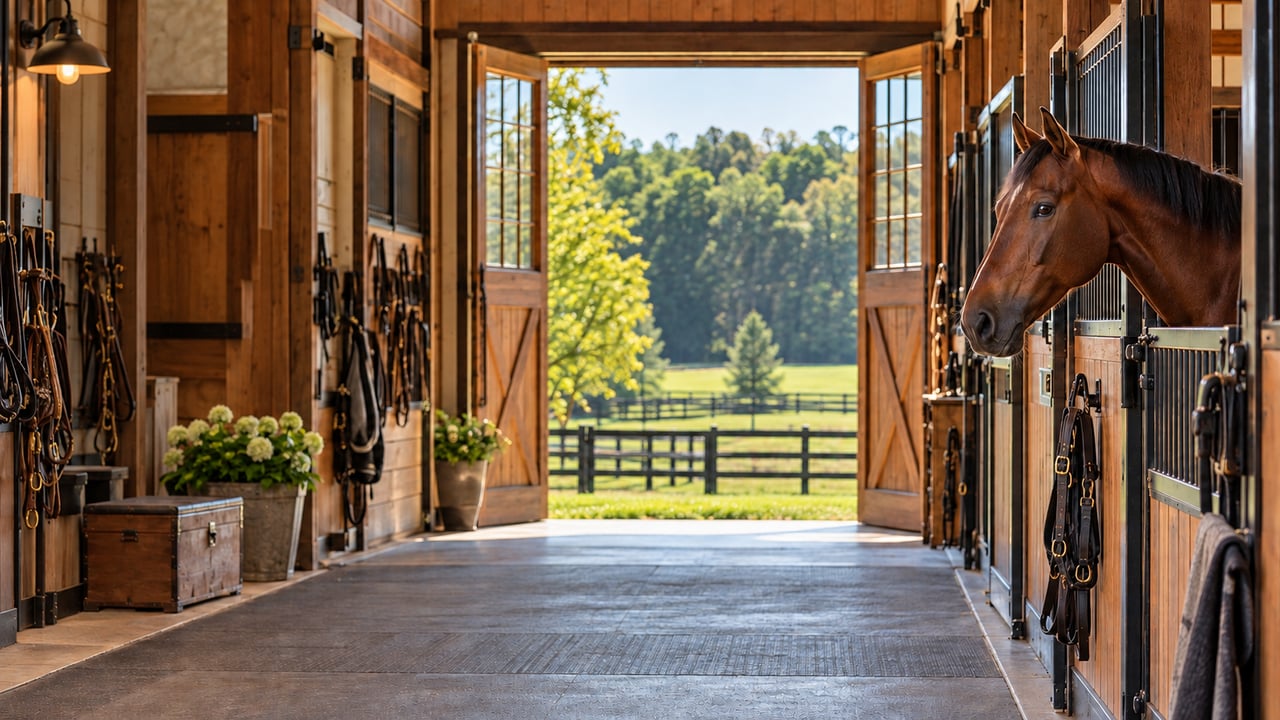
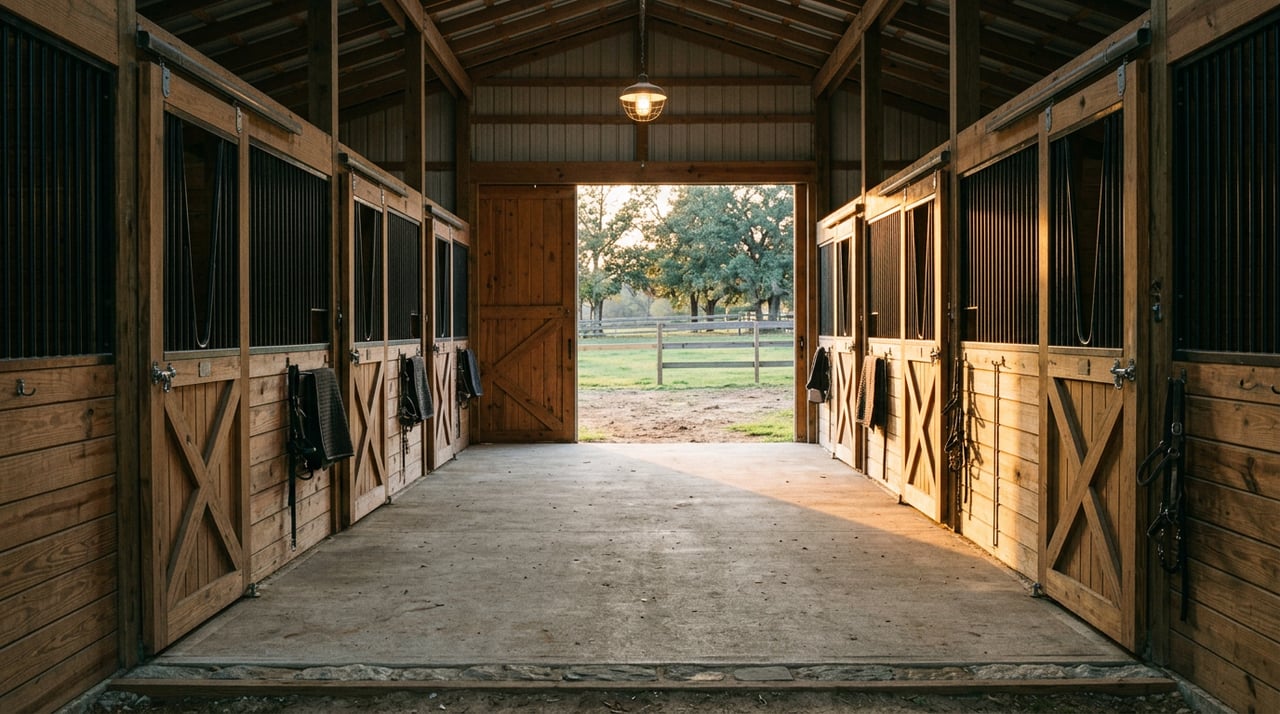
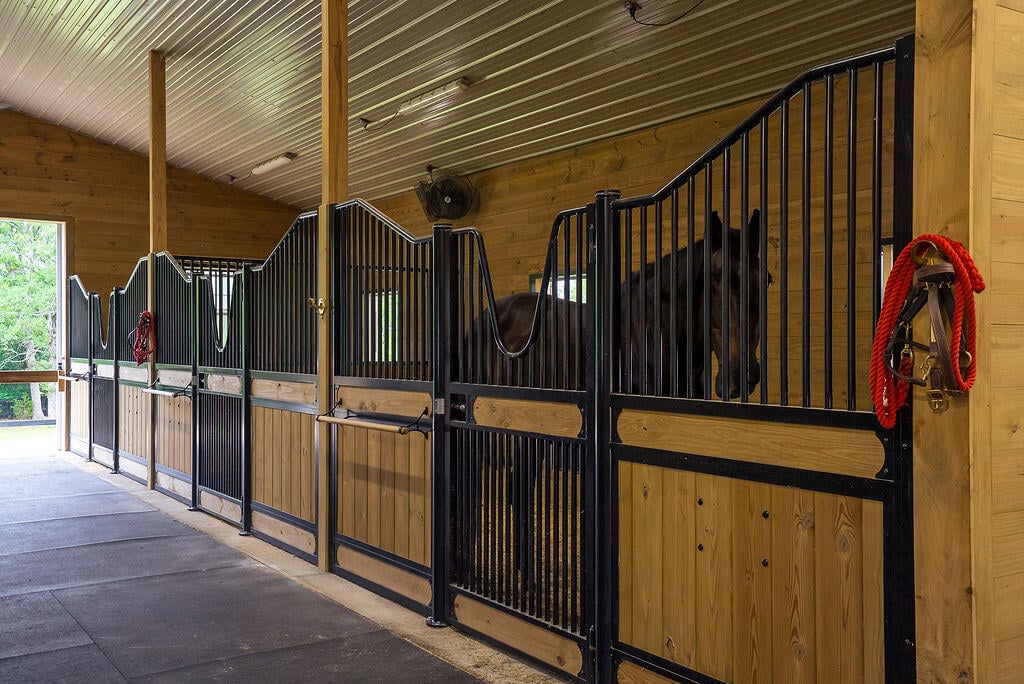
Notice the air, light, flooring, stall condition, and aisle layout. Can you picture grooming, cleaning stalls, and having the veterinarian or farrier work there?
Horse barns need air exchange to remove moisture and maintain air quality. An attractive interior doesn’t tell you whether the ventilation works well, so ask how the barn is managed throughout the year.
During your visit, consider:
Make a note of questions that require a qualified inspector or equine professional. A showing is your opportunity to identify what needs a closer look.
Some of the most useful property features are easy to overlook because they aren’t especially photogenic.
Water access is one of them.
Horses need access to clean, fresh water, and pasture planning should account for how water sources will be filled and cleaned.
Check where the hydrants, troughs, and other water sources are located. Ask how the current owners manage daily watering and what happens if a system stops working.
Then follow the route a hay delivery would take.
Where does the truck unload? Where is hay stored? How far would you carry it to feed the horses? Is there space for bedding, feed, tools, and equipment?
A beautiful tack room is a bonus. Convenient access to the supplies you use every day may have a bigger effect on your routine.
This is one of the simplest ways to evaluate a property: walk through your usual routine.
Start where you would leave the house. Head to the feed storage area, then the stalls, then the turnout gates. Think about filling water, cleaning stalls, and moving manure to its designated location.
Picture doing the same walk in rain, in the dark, or when you’re running late.
Ask yourself:
You may discover that a modest barn with a thoughtful layout suits your life exceptionally well.
An arena can be a major attraction, but look closely at how it fits your riding plans.
Ask about its dimensions, footing, drainage, and maintenance history. If it’s central to your purchase, consider having an experienced arena professional evaluate it.
If you plan to ride off the property, verify the access you’re relying on. A trail visible nearby doesn’t establish that you have permission to use it.
Questions to explore include:
For an Aiken property search, think about the destinations you expect to visit regularly and check the actual drive from each property.
Before a showing, write down what your horses need.
Perhaps you have a senior horse who needs a separate feeding area. Maybe one horse requires controlled grazing, or your herd needs more than one turnout group. You might need a spare stall for a visiting horse or a separate space for a new arrival.
Use those needs to guide your tour:
A property can have excellent facilities and still require changes to suit your particular horses. Identifying those changes early helps you plan realistically.
Before committing, make a list of what is ready to use, what needs repair, and what you would like to add later.
Ask for information about existing systems, maintenance, and improvements. Verify the property rules and approvals relevant to your intended use, especially if you plan to board horses, teach lessons, or build additional facilities.
Your review might include:
Getting estimates for significant work can help you compare properties more fairly. Two similarly priced listings may come with very different first-year expenses.
Imagine your horses settled in, your equipment put away, and your usual chores underway. Think about the parts of the property you would use every day.
The beautiful barn may be what catches your eye. The turnout, access, storage, and thoughtful layout are what you’ll live with.
When those details fit your horses and your routine, it becomes much easier to picture making the property home.
Searching for a horse property in Aiken or the surrounding area? Start with what matters most to you: your horses, your riding plans, and the way you want to live.
Contact Lea McCullough at Distinctive Horse Properties to discuss your wish list and explore properties that could suit your next chapter.

As the founder of Distinctive Horse Properties and Operating Principal and co-owner of Keller Williams Aiken Partners, Lea combines high-level leadership, refined marketing, local insight, and concierge-level service to help buyers and sellers navigate equestrian real estate with confidence, clarity, and care.
Lea Mccullough
Address 237 Park Avenue SW STE 101 Aiken, SC 29801